
In times of natural disasters, cyber attacks, and other crises, organizations must be prepared to respond effectively and minimize the impact of unexpected events.
Business Continuity Management (BCM) and organizational resilience are two essential elements for protecting businesses against disruptions ranging from natural disasters to cyber attacks. Their purpose is not only to ensure that organizations can continue operating during a crisis but also to help them emerge from challenging situations stronger than before.
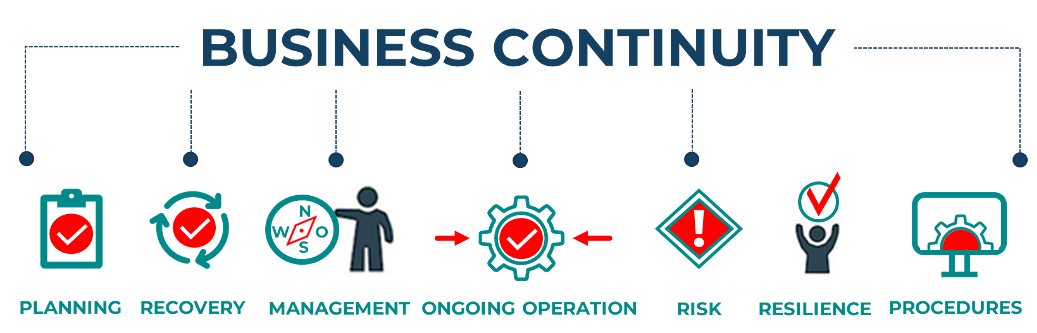
What Are Business Continuity Management and Organizational Resilience?
Business Continuity Management (BCM) is a fundamental component of corporate security. Its primary objective is to minimize the impact of disruptions and ensure that critical business operations can continue during and after a crisis.
BCM includes the development of strategies, plans, and processes that enable organizations to respond effectively to disruptive events and maintain business continuity.
Typical elements include:
A well-designed BCM framework provides significant benefits. It strengthens organizational resilience, protects both internal operations and external stakeholders, increases investor confidence, enhances corporate reputation, and reduces business risk. Organizations with a mature BCM program are better prepared to manage crises and gain a valuable competitive advantage.
Business Continuity Management is not a one-time project—it is an ongoing process that requires continuous review, testing, and improvement. Organizations with an established BCM framework are able to recover more quickly after disruptions, resume business operations faster, and strengthen the confidence of customers, partners, and other stakeholders.
Resilience has become an increasingly important concept in the field of organizational security. A resilient organization can adapt to changing circumstances and continue operating successfully—even under adverse conditions. However, resilience is not only about responding effectively to incidents; it also requires proactive preparation. Organizations that identify and mitigate risks early are better protected and can recover much faster when disruptions occur. In today's rapidly evolving threat landscape, resilience has become a key factor for long-term business success and sustainability.
How Are BCM and Resilience Connected to Regulatory Requirements?
Business Continuity Management and organizational resilience play an increasingly important role in regulatory compliance and cyber insurance. Regulatory authorities as well as insurance providers expect organizations to establish effective BCM programs and strengthen their resilience against operational disruptions. These capabilities contribute to the stability of critical services, protect public interests, and significantly reduce cyber-related risks. From an insurer's perspective, mature BCM processes also help minimize potential financial losses. The overall objective is to ensure that organizations can continue operating under adverse conditions and recover quickly following a disruptive event.
How Can You Protect Your Organization from Risks?
The first step is to conduct a comprehensive risk assessment that considers both internal and external threats—including natural disasters, technical failures, cyber attacks, supply chain disruptions, and staffing shortages. Based on this assessment, organizations should perform a Business Impact Analysis (BIA) to evaluate the effects of potential disruptions on critical business processes and define acceptable recovery objectives. The findings from both activities form the basis for developing a Business Continuity Plan (BCP) that provides clear guidance for responding to different disruption scenarios.
To ensure that BCM and resilience measures remain effective over time, organizations should establish a structured management cycle or management system that continuously identifies, evaluates, and reduces risks.
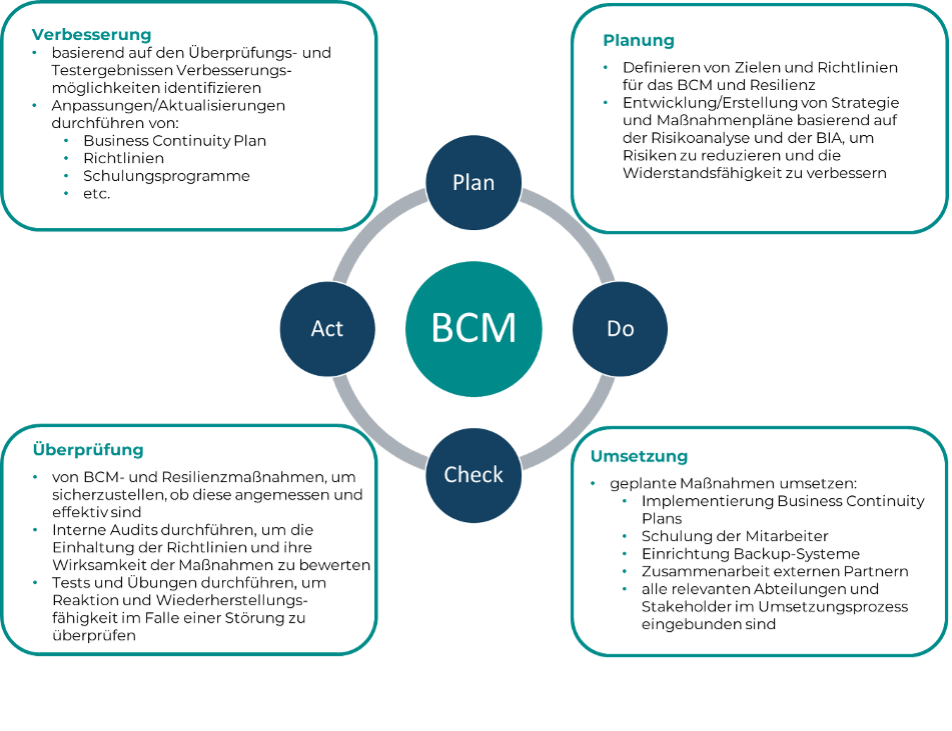
Implementing such a management cycle enables organizations to continuously improve their BCM capabilities and organizational resilience. It ensures that employees can respond quickly and effectively to new threats while establishing clear responsibilities, governance structures, and monitoring processes. Through continuous improvement and proactive planning, organizations significantly increase their resilience and reduce the impact of future disruptions.
Why Should Your Organization Invest in BCM and Resilience?
Implementing Business Continuity Management enables organizations to identify their critical business processes and establish measures that prevent or minimize operational disruptions. Companies that invest in BCM and organizational resilience not only reduce the impact of unexpected events but also strengthen their reputation, credibility, and trust among customers, partners, and stakeholders. Employees also benefit from clearly defined procedures and responsibilities, giving them confidence and certainty during emergencies.
In addition, effective BCM and resilience programs help organizations meet regulatory requirements while significantly strengthening their overall risk management capabilities.
What Does an Effective BCM and Resilience Program Look Like?
Successfully implementing Business Continuity Management and organizational resilience requires a clear strategy and consistent execution. Every relevant area of the organization should be involved to ensure a comprehensive and effective approach. Establishing a dedicated team with expertise in BCM and resilience is highly recommended. This team should possess the knowledge and authority to oversee implementation, monitor progress, and continuously improve the program. Ideally, internal experts should be supported by experienced external specialists who contribute additional expertise and best practices.
Regular reviews and updates of the BCM strategy are equally important to ensure it continues to address evolving business requirements and an ever-changing threat landscape. Building effective BCM capabilities requires both time and resources—but it is an investment that delivers long-term value by protecting the organization from costly disruptions, financial losses, and operational downtime.
Conclusion: Protect Your Organization with Business Continuity Management & Resilience
Business Continuity Management and organizational resilience are essential for protecting organizations against unexpected disruptions. The objective is not merely to prepare for crises, but to ensure the organization can respond quickly, recover efficiently, and continue operating when incidents occur. A comprehensive BCM strategy combined with a resilient organizational culture safeguards business continuity and significantly accelerates recovery after disruptive events.
Organizations should regularly review, test, and update their BCM plans to ensure they remain effective against current threats and future challenges. In an increasingly uncertain world, continuous improvement is the key to long-term resilience and business success.
If you would like to strengthen your organization's Business Continuity Management and resilience, our experts are happy to help you develop a tailored solution that fits your specific requirements.